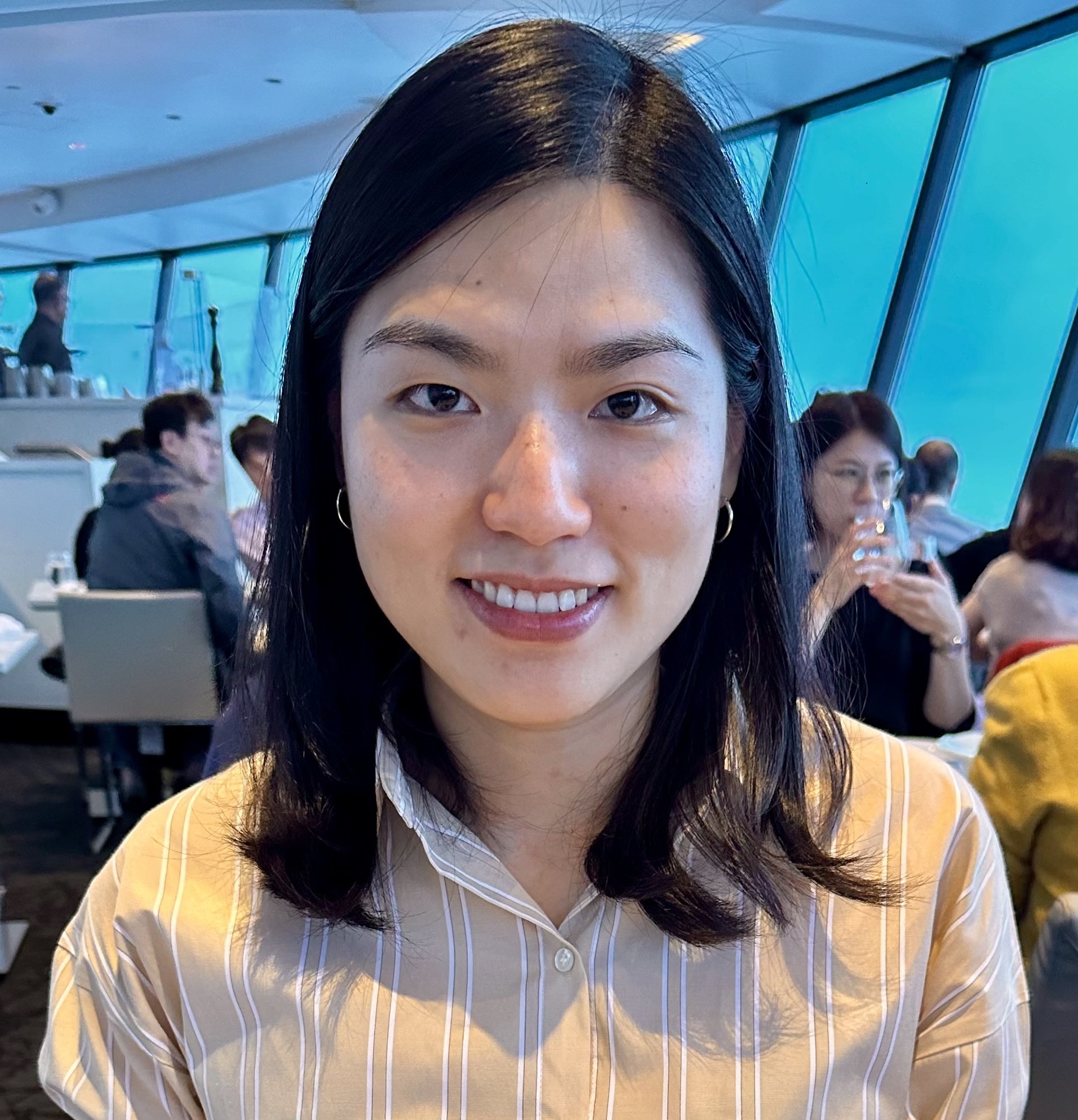
Profile:
I am a postdoctoral research fellow in the Kimel Family Translational Imaging-Genetics Laboratory at the Centre for Addiction and Mental Health (CAMH). I received my Ph.D. in Cognition and Neuroscience at the University of Texas at Dallas.
Research:
My research aims to advance methodological rigor in cognitive neuroscience, particularly in clinical populations, by developing and refining statistical methods that address questions beyond the reach of traditional analytical approaches.
My Ph.D. studies focused on developing sparsification techniques for different multivariate methods, including sparse correspondence analysis, sparse multiple correspondence analysis, sparse discriminant correspondence analysis (Yu et al., Computational Statistics & Data Analysis, 2025), sparse partial least squares correlation, sparse partial least squares correspondence analysis (doctoral dissertation), and sparse multitable methods (published in Yu et al., Journal of Chemometrics, 2024). This work focused on improving the interpretability and scalability of multivariate analyses for high-dimensional datasets.
Building on this methodological foundation, I applied multivariate approaches to investigate brain connectivity and cognition in schizophrenia spectrum disorders (SSDs). Our work showed that cognitive impairments in SSDs are associated with less differentiated large-scale brain network organization during rest. Importantly, these neural patterns were also related to clinical symptoms, functional outcomes, and quality of life (Yu et al., BP: CNNI, 2025). These findings demonstrate the value of multivariate methods to delineate meaningful brain-behavior relationships in clinical populations. Extending this line of research, our ongoing work adopts a transdiagnostic framework, by including individuals with autism spectrum disorder, to identify brain connectivity features that relate to social cognitive performance across diagnoses.
More recently, I have become increasingly interested in understanding individual differences in brain organization, particularly through individualized brain parcellation and its potential applications in precision neuroimaging. In collaboration with Dr. Micaela Chan at the Center for Vital Longevity, University of Texas at Dallas, we identified a key analytical challenge: existing methods cannot adequately analyze individualized parcellations that vary in both the number and size of parcels across individuals. To address this limitation, we developed IndivSTATIS, a novel multivariate framework designed specifically for individualized brain data (Yu & Chan et al., preprint on BioRxiv, 2026, currently under review by Imaging Neuroscience). This project is especially meaningful to me because it bridges methodological innovation with emerging questions in precision neuroscience, and I look forward to applying it to better understand heterogeneity across clinical populations.
Life:
I was born and raised in Tainan, Taiwan. I was a scout during undergrad, and I enjoy playing with ropes and knots and building campfire. I like nature but also enjoy reading and watching Netflix (and doing nothing). I am a fan of Brandon Sanderson and Bill Bryson. I am currently learning French because I somehow started collaborating with many French researchers.